Carnival in Brazil: History, Culture, and How It Became a Global Gay Mecca

Carnival Isn’t a Party, It’s More Of A "Release."
February 2024 was the first time I actually experienced Carnaval in Brazil, after several failed attempts in previous years. And when I finally made it, it was more than I imagined or expected.
Y'all, it was so much more that I returned several times throughout the year and did a temporary long term stay at the ending of that same year, went back to the states- packed my bags, then returned permanently.
Before visiting, I had seen the photos, the costumes, the looks, the samba. But what you can’t see in an Instagram post is the energy that surges through the entire country. Not only Rio and Bahia.
My original thought, like many first-time foreigners — is that Carnaval is something you attend.
But once the day came, I realized it wasn’t something to attend. It's more so something to embody.
Everything is different. Even the way people move.
How can there be millions of people shoulder to shoulder (no exaggeration)— and no one is fighting?
No arguments. No judgmental stares. Hate to say it, but the U.S. could never.
During Carnaval, it feels like there’s an unspoken rule of positivity and respect.
Carnival Is Older Than The Party You Flew In For
Before I ever stepped into a circuit warehouse or rooftop event, I started learning where Carnival actually comes from. Part of that knowledge came from being Jamaican and growing up in South Florida, a Caribbean mecca. I already understood Carnival as more than a party. But my understanding deepened when I read Dancing in the Street: A History of Collective Joy.
Carnival didn’t just belong to Brazil or even black people. It expanded across Europe and the Caribbean. On the surface it may look different depending on the country or city, but the roots are the same:
Unfiltered joy. Confidence. Culture.
In Brazil, Carnival is Portuguese Entrudo mixed with African rhythms brought by enslaved people, layered with Indigenous influence. It was shaped in Black neighborhoods. Built by samba schools. Carried by communities that didn’t have wealth but had rhythm and pride.
I learned about samba schools during my first Carnival when I thought I could just “walk in the parade.” if I had a look. Once I started researching more, I quickly learned they are cultural institutions. They rehearse all year. They tell stories through music and costume. They compete with devotion. They preserve legacy.
Carnival has always been political. It has always been about visibility. It has always been about being seen.
But it's more than production and entertainment. It’s storytelling at its finest, so I need to continue finding my Brazilian story, so I can pour it into my samba, costume and then have the oppertunity to show up on the big stage.
The Freedom Is Temporary — And That’s Why It’s Powerful
If you stay in Brazil longer than two weeks — outside of tourist season — you learn that the country is complicated. It’s sensual and conservative. Open but religious. Affectionate and judgmental. But Carnival bends that tension. For a few days, everyone loosens. You can dress like a vagabunda (google it). Gendered attire matters less. Music is louder everywhere. People are more affectionate.
You see straight men in skirts, (which I may have unlocked a small kink for). Executives covered in glitter. Grandmothers dancing in the street. Drag queens leading parades. It’s chaotic, but it's intentional.
And when you’re queer, that shift is more appreciated and valued.
How It Became a Gay Mecca
I do have to discuss the explosion of gay men who have started making their way to Brazil. I think we can all agree that the global gay community didn’t invent queer culture in Brazil.
It has always been evident that It was already here. (and not just because of your feed on Twitter)
São Paulo hosts the largest Pride parade in the world.
Rio has had visible LGBTQ nightlife for decades.
Salvador carries deep Black queer energy woven into its culture.
But Carnaval amplifies everything.
I would say Instagram influencers saw the scale and domestic promoters saw an opportunity to market internationally. They saw the bodies, freedom and a market.
Now during Carnaval week you’ll find massive circuit events, beach takeovers, rooftop pool parties — men flying in from New York, Berlin, Tel Aviv, London. Parties where local Brazilians often can’t afford entry unless they’re considered “rich” by Brazilian standards.
Which is why the best parties are still the blocos. (My hot take)
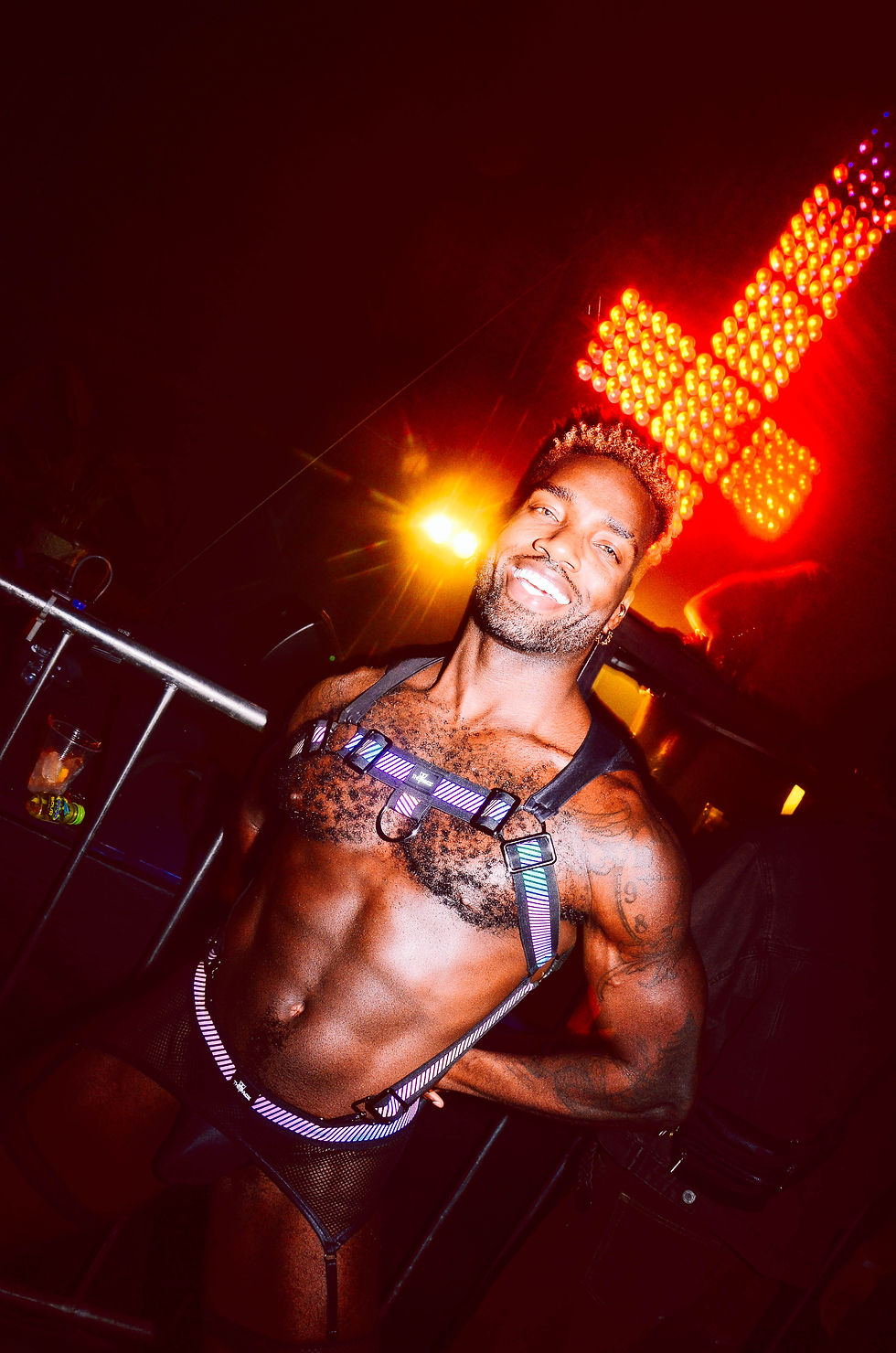
You’ll see harnesses at blocos. Queer couples kissing openly on Ipanema. Queer-coded aesthetics blending with traditional samba culture. I think it's important to note Carnaval didn’t become a gay destination because it was marketed. It became one because it already allowed visibility.
And then the world noticed. (I'm teary eyed writing this at this point.)
Salvador vs Rio — Two Different Energies
This is where people get it wrong.
They think Carnaval is one thing.
and it isn’t.
Salvador
Salvador is raw.
It’s loud. It’s crowded. It’s overwhelmingly Black. It’s rhythm-heavy. It’s spiritual.
The blocos in Salvador feel intense because the trucks move through the city and thousands follow them like waves. You are in the street sweating, shoulder to shoulder with strangers.
There’s less curated glamour and more cultural weight. It feels ancestral in a sense. Probably because it still feels local. It less filtered for tourism. And because of that, it feels real in a different way.
I lasted one day before I was introduced to dengue fever last year — which took me out for the rest of my stay.
But I lived to tell the tale of Day 1 during Bahia Carnaval.
Rio
Now Rio feels cinematic. I call it the entertainment capital of Carnival.
Think-
Mountains
Ocean
Sunlight
Body culture
Everything just feels glamorous. Polished and Instagram-friendly.
The Sambadrome parades are theatrical masterpieces. The beach culture blends seamlessly into Carnaval culture. The circuit scene is organized, massive, international. Rio feels like a huge stage and Salvador feels like a drum circle that swallowed the city.
Both are powerful.
Just different.
The Instagram Effect
If we’re being honest, Carnival became a global fantasy because it photographs beautifully.
Tan skin glowing. Brazilian choreography to funk blasting in the streets. Mountains in the distance. The ocean framing everything.

It’s like the entire city has a vivid color grade over it. (If you're into color grading photos/videos you know exactly what i'm talking about) Social media turned Carnival into a visual export. However underneath the aesthetics, the roots remain.
That’s what inspired the color wave of SLTBURN'S CARNAVAL collection — saturated yellows, oranges, blues, greens. I wanted to transfer the look of Rio into a gay staple: the swim brief.
What It Feels Like To Be There
This year, Carnival wasn’t much of a party for me. I was running around photographing the collection and working.
But what I realized — again — is that for this one week, you can step into spaces where bodies aren’t shrinking and it doesn't feel like queerness is contained to a club.
For some people, that feeling lasts a week. For others, it shifts something deeper and you begin to search for it everywhere. Hell, I feel like i'm constantly chasing it.
Regardless of how long it lasts, there’s a mental shift.
And people go back home differently.
(You'll see Carnival and Carnaval spelled in both the Português and standard english way- both are valid.)
To Wrap This Up
If you weren't able to make it to Carnaval this year, it's okay- it took me 4 years before I was able to come. But when I finally made it, it was worth it. To help prepare you before hand, I took the time and create a guide that will walk you through what to expect. You can find it here.


Comments