The Difference Between Mentorship and Seduction: What Healthy Gay Relationships Look Like Across Generations
- Amir Morris
- Dec 4, 2025
- 3 min read

Our community would look very different if more older gay men chose mentorship over seduction.
That’s a strong statement, I know. But the longer I’ve lived, the more I’ve realized how much weight it carries.
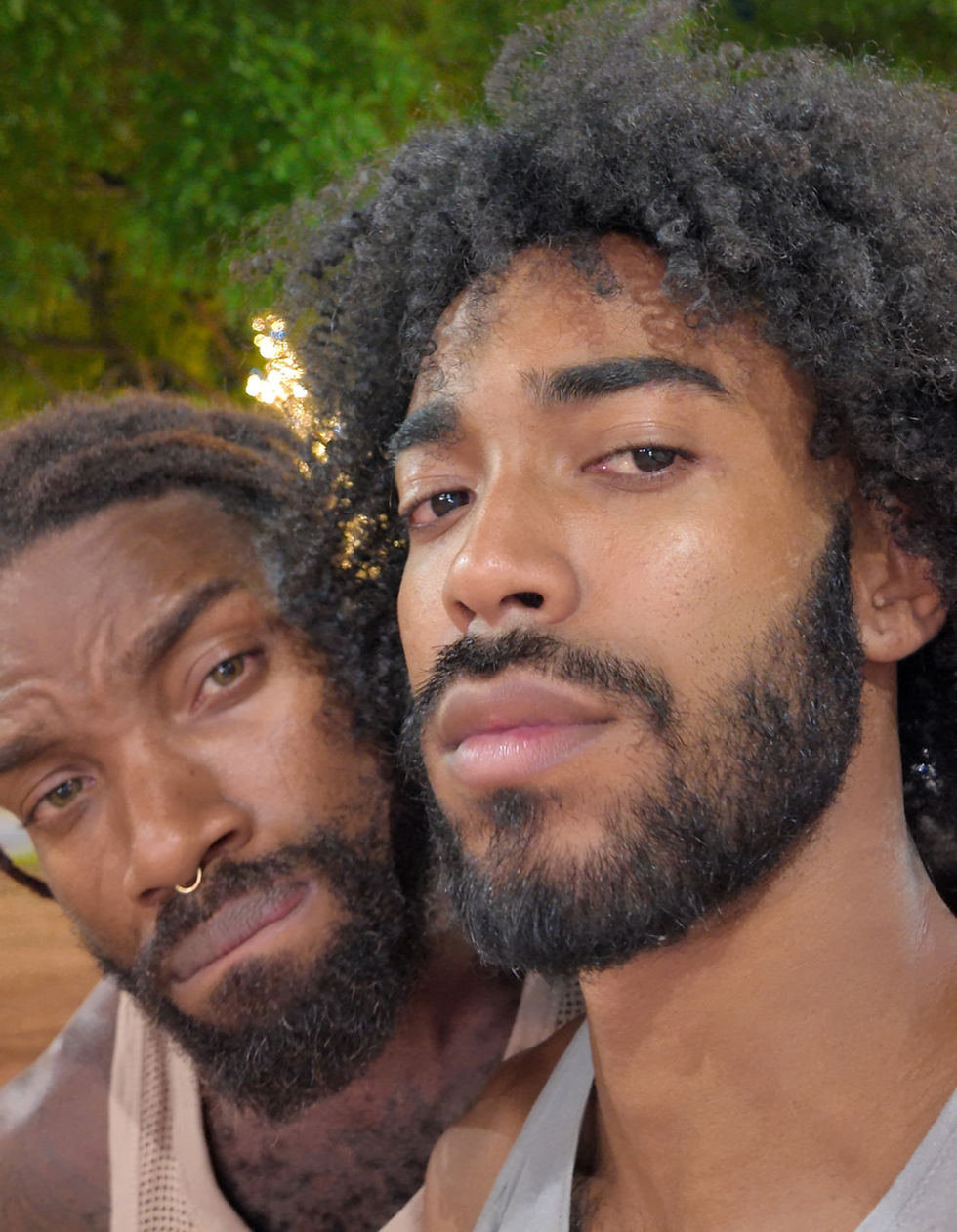
A few years ago, while I was working at Hydrate in Chicago, I met someone by chance — a 20-year-old named Ontario. A mutual friend introduced us. We exchanged Instagrams the way you do in gay nightlife, and over time we started talking more. He’d tell me what it felt like to be brand-new to the scene. The excitement, the confusion, the pressure to fit in, the mistakes, the heartbreaks… and instantly, I saw myself at that age.
I didn’t have a mentor when I was 20. If I’m being honest, I don’t even have one at 32, and I wouldn't mind having one hahaha
Everything I learned came from trial, error, and surviving things I didn’t have the language for at the time. So when Ontario opened up about his experiences, something shifted in me. Without even planning it, I became protective of him. Not in a controlling way — but in a guiding way. I offered perspective when he asked, and sometimes when he didn’t. I listened. I told him the truth. I showed up in ways I wish someone would have shown up for me.
That’s when it hit me: Not every younger gay man who crosses your path is an opportunity for romance. Sometimes he’s your responsibility.
And that’s where things get complicated in our community.
When Attention Replaces Guidance
There’s an uncomfortable pattern in queer spaces: Older gay men often blur the line between interest and influence.
Some see younger guys as “fresh,” “cute,” “innocent,” or “fun” — and instead of offering mentorship, they offer access to the same things that destroyed their own foundations:sex, drugs, alcohol, and pressure disguised as experience.
When you’re 20, you’re still forming your identity. You’re still figuring out boundaries, desires, values, and self-worth. And older men have a responsibility — whether they acknowledge it or not — to either protect that innocence or exploit it.
Too many choose the latter.
It’s easy to say, “He’s grown.”But growth doesn’t equal guidance.
Y'all, younger gay men don’t need more “experiences.” They need safety, boundaries, wisdom, and examples of what healthy adulthood actually looks like.
Chosen Family Means Showing Up — Not Showing Out

We love to talk about chosen family in the LGBTQ+ community. But somewhere along the way, we forgot what family means. Family is guidance. Family is protection. Family is teaching the generation behind you how to move with intention instead of confusion. Family is NOT turning every younger connection into a romantic prospect.
When I look back at the times I struggled most, navigating dating, nightlife, masculinity, friendships, identity, community politics — I realize how much smoother everything could’ve been if I’d had just one older gay man say: “Hey, here’s what’s actually happening. Here’s what I learned the hard way. And here’s how you can avoid that.”
That kind of wisdom is priceless. And it’s also rare.
We Need More Mentors, Not More ‘Situationships’
There’s a difference between mentoring someone and seeing them as an option. A lot of gay men blur that line because it benefits them — not the younger person.

But mentorship requires self-control, emotional maturity, and an ego that’s been checked at the door. It requires asking yourself:
Am I guiding him or grooming him?
Am I helping him grow or helping myself feel relevant?
Am I offering stability or chaos?
These are tough questions, but they matter.
Because the next generation is watching us. And whether we like it or not, we are shaping the spaces they walk into.
My Takeaway — and My Challenge for Us
Everything I learned over the years — the mistakes, the heartbreaks, the pressure, the missteps — has become the foundation I use to show up for younger gay men today. I’m not perfect. I’m not a guru. I’m just someone who finally understood that mentorship is love in its most mature form.
So here’s my challenge to all of us:
Be the safe space you wish someone gave you. Be the boundary. Be the wisdom. Be the example.
Show the younger generation what healthy looks like, not because you want something from them, but because you genuinely care about the community you’re part of.
That’s how we build something better than what we inherited.
Thank you Ontario for teaching me.



Comments